Навигация по сайту



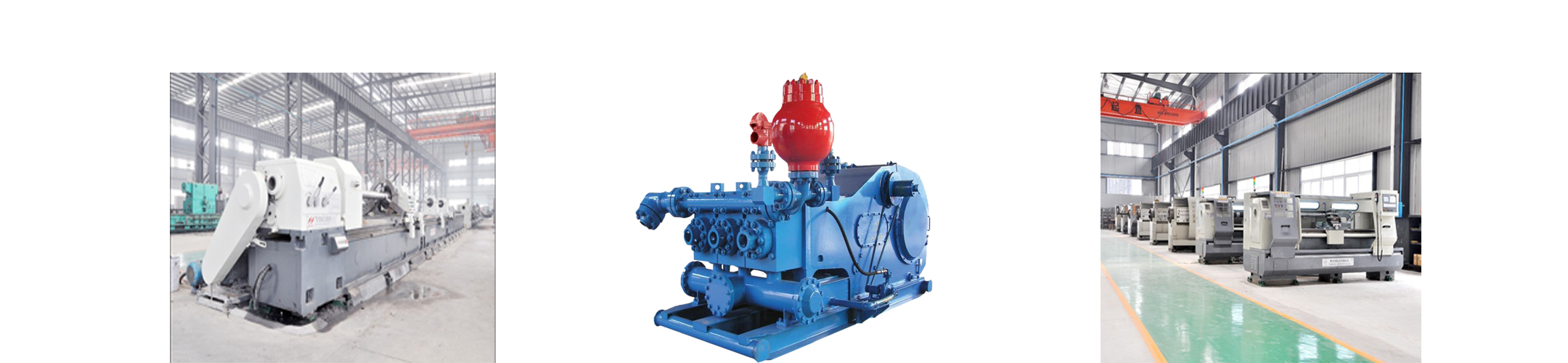
The evolution from duplex to triplex mud pump technology represents one of the most significant advancements in drilling equipment over the past decades. While traditional duplex systems served the industry admirably for many years, the F series triplex mud pump delivers measurable performance improvements that translate directly to operational efficiency and economic benefits. This detailed comparison examines the key differences between these technologies and their impact on modern drilling operations.
The most obvious distinction between duplex and triplex configurations lies in the number of cylinders. Traditional duplex mud pumps feature two cylinders operating 180 degrees out of phase, while the F series oilfield mud pump utilizes three cylinders spaced 120 degrees apart. This seemingly simple difference has profound implications for pump performance and operational characteristics.
In duplex systems, each cylinder completes its discharge stroke while the other cylinder performs its suction stroke. This arrangement creates significant flow pulsation, with discharge varying dramatically throughout each rotation. The triplex design produces much smoother flow because at any given moment, at least one cylinder is in mid-stroke, moderating the peaks and valleys inherent in positive displacement pump operation.
Flow pulsation affects multiple aspects of drilling operations. The pronounced pulsations from duplex pumps stress surface piping, requiring heavier-wall pipe and more robust support systems to withstand the cyclic pressure variations. These pulsations also transmit downhole, potentially affecting sensitive measurement-while-drilling equipment and causing premature fatigue in drill string components.
The F series mud pump reduces pulsation amplitude by approximately 60% compared to duplex systems. This smoother flow reduces stress on all downstream components, extending their service life and improving reliability. Drilling contractors report measurably fewer drill string failures in operations using triplex pumps versus comparable operations with duplex equipment.
Reduced pulsation also improves the accuracy of flow measurement systems. Electromagnetic and turbine flowmeters operate more reliably with steady flow, providing better data for managed pressure drilling and other advanced techniques that require precise flow control. This improved measurement capability enables optimization strategies impossible with the erratic flow from duplex pumps.
Volumetric efficiency measures how much of the theoretical pump displacement actually reaches the wellbore. Losses occur through valve leakage, piston packing leakage, and fluid compressibility effects. Well-maintained duplex pumps typically achieve volumetric efficiencies of 85-90%, meaning 10-15% of the power input generates heat rather than useful work.
The advanced valve technology in the F series oilfield mud pump improves volumetric efficiency to 92-95% under normal operating conditions. This improvement stems from faster valve closure and better sealing characteristics. Over the course of drilling a well, this efficiency advantage saves substantial energy while delivering more effective hole cleaning and faster penetration rates.
Operating costs extend far beyond fuel consumption. Maintenance expenses represent a significant portion of total mud pump ownership costs, and here the triplex design offers clear advantages. The smoother operation of the mud pump reduces wear on all components, extending service intervals and lowering parts consumption.
Field data from major drilling contractors shows that triplex pumps typically operate 30-40% longer between fluid end services compared to duplex systems working under similar conditions. This extended service life reflects better load distribution across three cylinders instead of two, reduced pulsation stress on components, and improved metallurgy in modern pump designs.
The modular construction of F series oilfield mud pumps also reduces service time when maintenance is required. Standardized fluid end modules can be changed in hours rather than days, minimizing non-productive time. Many operations maintain spare fluid ends, allowing rapid replacement and off-site rebuild of worn assemblies. This approach is less practical with duplex pumps due to their larger, more integrated construction.
With energy costs representing a significant operational expense, pump efficiency directly impacts drilling economics. The improved volumetric efficiency of triplex pumps provides part of the energy savings, but mechanical efficiency differences also contribute. The F series mud pump power end is designed with lower friction losses through optimized bearing selection and precision manufacturing.
Comprehensive dynamometer testing shows that triplex pumps require approximately 12-15% less input power to deliver equivalent hydraulic output compared to duplex systems. On a large drilling rig consuming thousands of horsepower, this efficiency advantage generates substantial fuel savings over the course of drilling a well. Operations using diesel-powered pumps see direct reductions in fuel costs, while electric-powered rigs benefit from lower power demand charges.
Modern drilling operations encounter diverse formation conditions requiring different mud properties and circulation rates. The F series oilfield mud pump offers greater flexibility in matching pump output to operational requirements. Multiple liner and piston size options allow operators to configure displacement across a wide range, optimizing for specific applications.
This configurability proves valuable when drilling programs encounter unexpected conditions. If formation pressures require heavier mud than originally planned, operators can reduce pump displacement to maintain optimal annular velocities without exceeding safe equivalent circulating density limits. Conversely, if formations prove more competent than anticipated, displacement can be increased to improve hole cleaning and penetration rates.
Duplex pumps offer some configurability, but the two-cylinder design limits options compared to the three-cylinder arrangement. The additional cylinder in triplex systems provides more combinations of liner and piston sizes, enabling finer tuning of pump performance to match specific requirements.
Equipment failures during drilling operations create expensive non-productive time while also risking wellbore stability and stuck pipe situations. Reliability statistics from multiple drilling contractors demonstrate clear advantages for triplex technology. Operations using F series mud pumps report 35-50% fewer unscheduled maintenance events compared to similar operations with duplex equipment.
This reliability advantage stems from multiple factors. The load distribution across three cylinders reduces stress on individual components, extending fatigue life. The smoother operation minimizes vibration-induced failures in auxiliary systems. Modern materials and manufacturing techniques in the mud pump also contribute, but the fundamental design advantages of the triplex configuration play a significant role.
While F series oilfield mud pumps typically command higher purchase prices than duplex alternatives, comprehensive economic analysis demonstrates superior total cost of ownership. When evaluating equipment investments, consider all cost factors including initial price, maintenance expenses, energy consumption, reliability, and operational efficiency impacts.
A typical economic comparison reveals that despite a 20-30% higher initial cost, triplex pumps deliver payback within 18-24 months of operation through reduced maintenance costs, lower energy consumption, and decreased non-productive time. Over a typical 10-year equipment life, the total cost of ownership for triplex systems runs 25-35% lower than duplex alternatives.
These savings compound in operations drilling multiple wells annually. A contractor operating three rigs equipped with F series mud pumps versus duplex alternatives might see annual savings exceeding $500,000 across their fleet. These economic benefits explain why the industry has largely transitioned to triplex technology for new equipment purchases.
For operations currently using duplex mud pumps, the decision to upgrade involves balancing the remaining useful life of existing equipment against the benefits of modern triplex technology. Many contractors choose to transition during scheduled equipment replacement cycles, avoiding premature disposal of functional equipment while capturing the advantages of new technology.
The widespread adoption of F series mud pumps creates an extensive support infrastructure with parts availability and service expertise globally distributed. This mature support network reduces the risk associated with adopting the technology, ensuring that operators can maintain their equipment effectively regardless of location.
The comparison between F series triplex and traditional duplex mud pumps reveals clear performance advantages across virtually every relevant metric. Smoother operation, improved efficiency, enhanced reliability, and superior economics combine to make triplex technology the logical choice for modern drilling operations. While duplex pumps served the industry well historically, the F series oilfield mud pump represents the current state of the art, delivering the performance and reliability that contemporary drilling operations demand.


